

Survival Aesthetic
Fashion in the Age of Permanent Crisis.

Since the Fall 2026 men’s fashion week, a few collections have stayed in the back of my mind. What we saw on those runways felt far beyond the mainstream language of nostalgia or the recycled trends of the 2010s.
Instead, it felt like the opposite… deeply present. A reflection of the emotional temperature of the moment.
Survival Aesthetic
Brands like Soshiotsuki, Doublet and Kolor presented garments that looked destroyed, distressed, and almost exhausted. Pieces that felt worn down, as if they had already survived something.
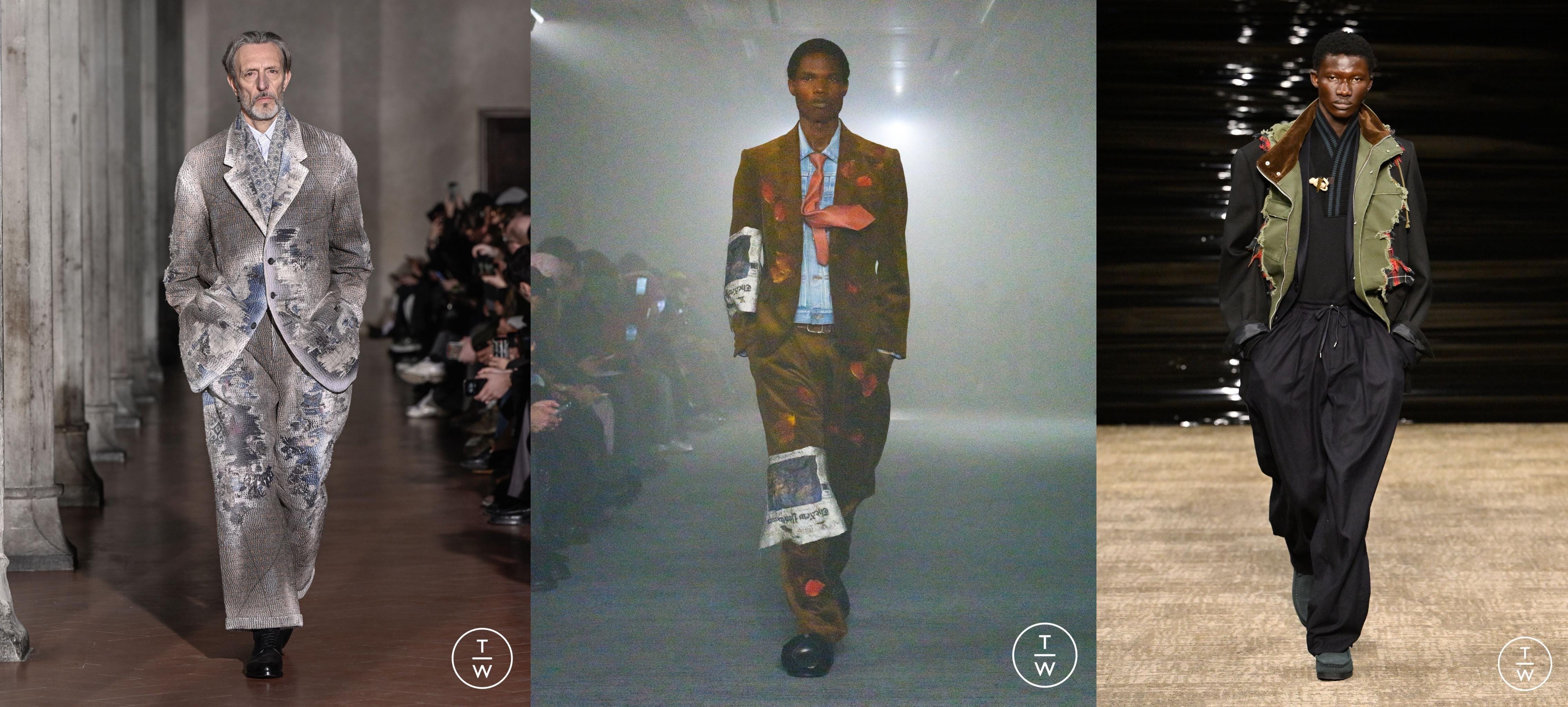
These visual codes make sense when we consider the current global mood: rising geopolitical tensions, the looming idea of another world war, and the accelerating reality of climate collapse.
Designer Taro Horiuchi from Kolor even described his collection as a study in pushing through uncertainty and adversity, while acknowledging how quickly society is shifting under the influence of AI.
At Doublet, the main concept reinforced this feeling. Models walked through a runway filled with smoke, creating a hazy environment that subtly evoked environmental impact and rising CO₂ levels.
These shows caught my attention because I’ve grown somewhat tired of the nostalgia wave that has dominated culture over the past few years. Seeing something more aligned with the anxieties of the present felt both sad and strangely refreshing.
That’s how life has felt since we emerged from the pandemic, right? A constant sense of instability, where everything feels slightly uncertain. As global tensions continue to intensify, it’s no surprise that this mindset is starting to appear in fashion.
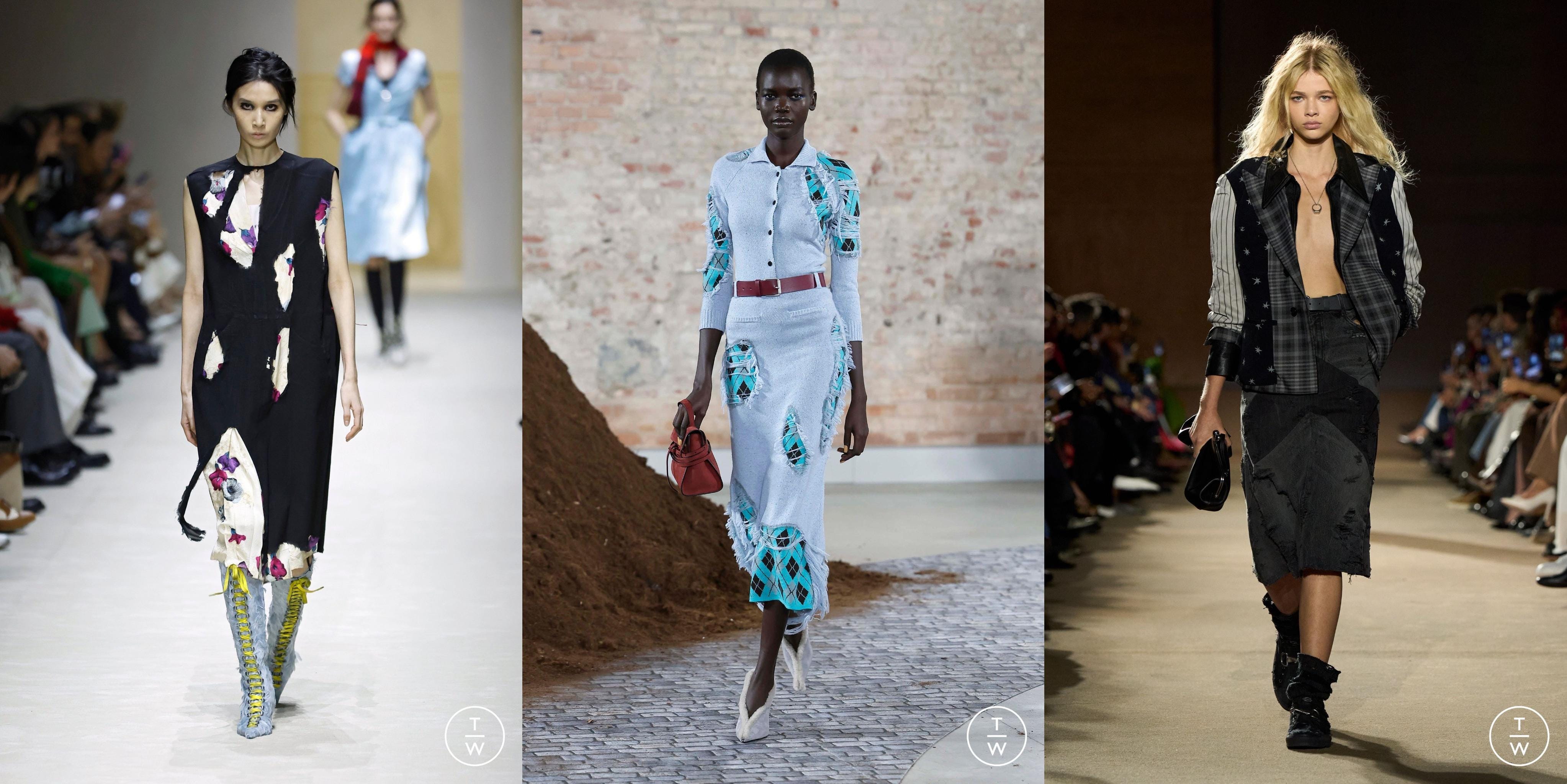
When the women’s Fall/Winter collections arrived, a similar visual language began to appear. Brands like Prada, Moschino, and Coach also introduced distressed garments on their runways.
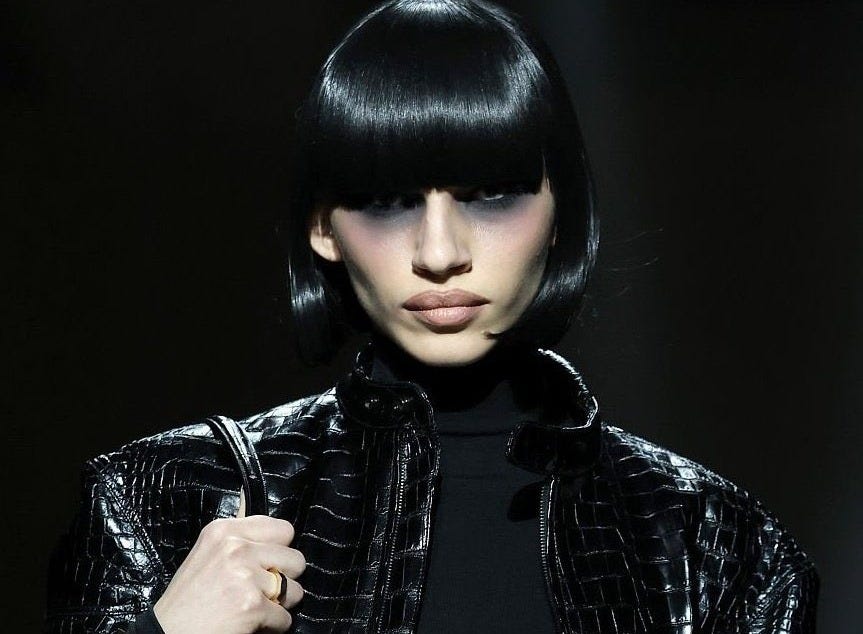
Gucci, for example, took the internet by storm. But what really stood out to me wasn’t the clothes, but the makeup. At first glance, the heavy makeup might read as indie sleaze or chaotic party energy. But to me, some felt different. Less party. More exhaustion.
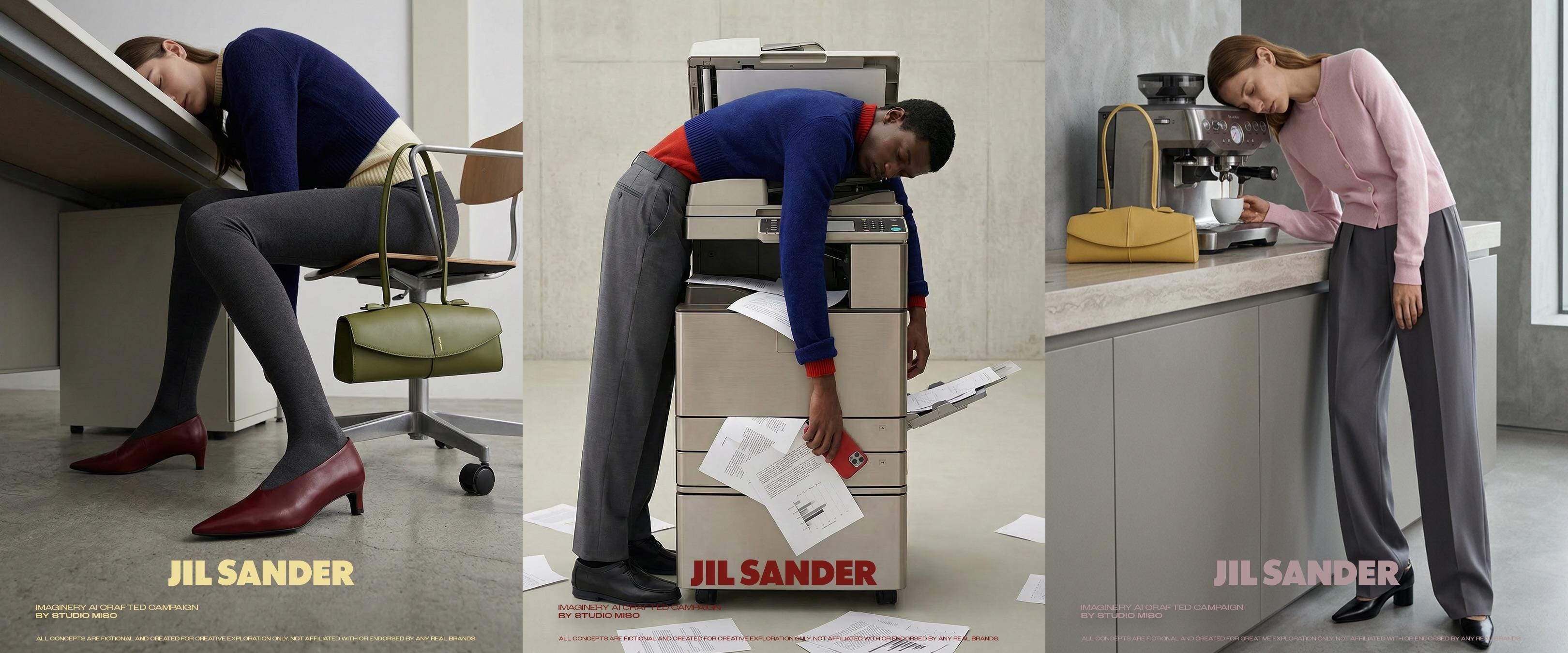
Another axample, my IG feed showed me a fake Jil Sander AI campaign created by Studio Misoo that perfectly captured this same exhausted energy. Of course, these are just impressions. But it’s hard to ignore the broader context we’re living in.
The Chaotic Reality
We are in a moment where the traditional promise of hard work leading to reward feels increasingly fragile. At the same time, the global emergency kit market keeps growing, fueled by rising awareness around disaster. In other words: anxiety is becoming structural, just think about how regulating our nervous system suddenly became the hot new thing. Maybe that’s exactly why pop culture seems to be searching so desperately for hope.
This “survival aesthetic” reminds me of the lens writer J'Nae Phillips explored in her essay Let’s All Cosplay Being Broke, go read it.
Such a sharp observation on fashion as an emotional barometer. We’ve moved past apocalypse-core as a fantasy and into survival as a daily physiological state. It’s fascinating (and deeply telling) that our clothes are starting to look as exhausted as our nervous systems feel!